


Episode:
44

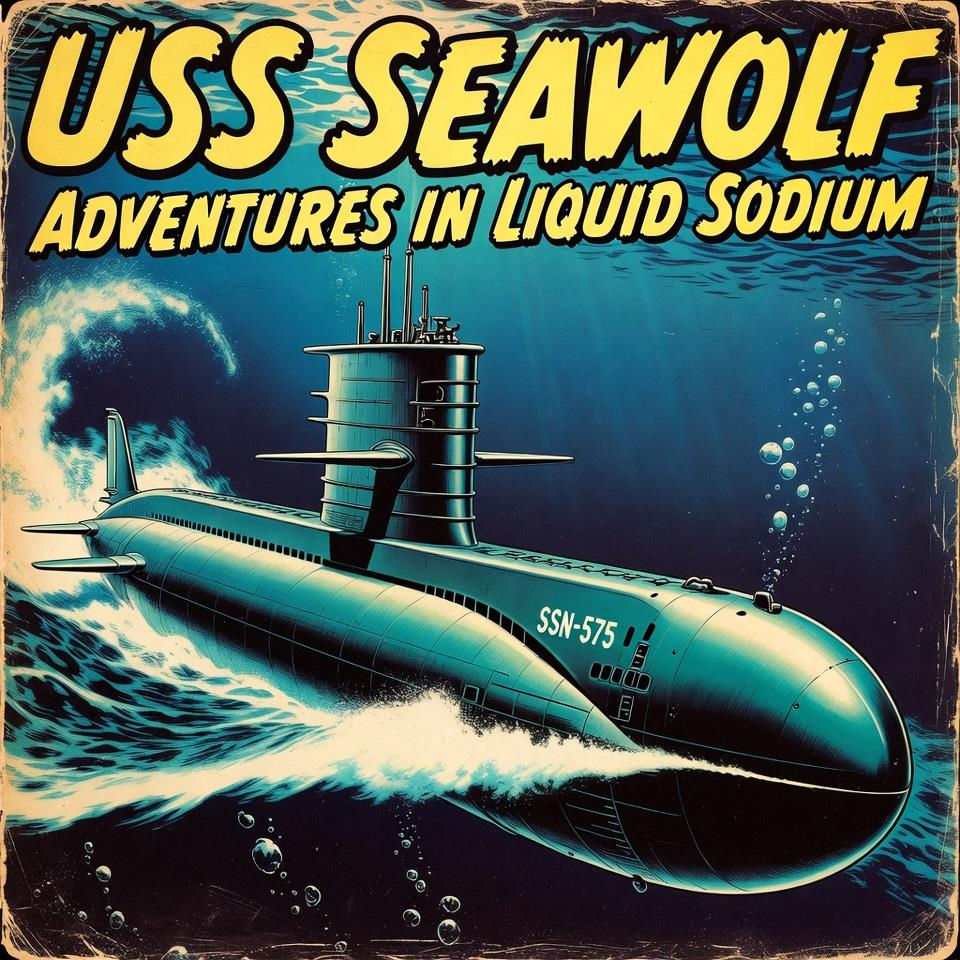
USS Seawolf SSN-575
Country:
USA
Years of Operation:
1956-1958
Category:
Research & Experimental
Reactor Type:
SFR
Coolant:
Sodium
Fuel Type:
Enriched Uranium
Moderator:
Thermal Power (MWth):
40
Electrical Power (MWe):
40
Status:
Research & Experimental

timeline
First Criticality Year
1956
Commercial Op Year
Shutdown Year
1958
Lessons Learned
The lessons landed hard and permanently:
1. Chemical reactivity matters, especially inside a sealed pressure vessel surrounded by seawater.
2. Exotic coolants multiply failure modes, not reliability.
3. Maintainability beats elegance, every single time.
4. There is a reason the Navy standardized on pressurized water—and never went back.
Seawolfdidn’t fail so much as she educated.
And as nuclear history keeps reminding us, the most valuable lessons are often taught by ideas that looked brilliant right up until they met reality.
sources

ARTICLE

USS Seawolf (SSN-575): When the U.S. Navy Tried Liquid Sodium—and Immediately Regretted It
In the mid-1950s, nuclear propulsion was still new enough that nobody fully knew where the nuclear dragons lived. The USS Nautilus had already proven that a pressurized water reactor could push a submarine around the globe with quiet competence.
Naturally, the next step was: Let’s try something harder. MUCH harder.
Enter the USS Seawolf (SSN-575), the Navy’s second nuclear submarine—and the only one ever powered by a liquid sodium–cooled reactor.
Construction began in 1953, she was launched in 1955, and by March 1957 Seawolf joined the fleet carrying the S2G reactor. This was not a fast neutron reactor, despite what many modern retellings assume. The core was moderated with graphite, so it was a thermal reactor. Liquid sodium carried the heat away.
On paper, it offered high heat-transfer efficiency and low operating pressure.
On a submarine, it offered something else entirely: operational stress and a maintenance nightmare.
This wasn’t the world’s first sodium-cooled reactor—terrestrial experiments like EBR-I had already gone down that road—but Seawolf was the first to take liquid sodium to sea.
And the ocean, being the ocean, had OPINIONS.
Sodium leaks are INVISIBLE.
Sodium BURNS in air.
Sodium reacts VIGOROUSLY with water.
Detecting small leaks was difficult, maintenance was brutal, and every repair carried a whiff of controlled panic.
The reactor worked, but it demanded constant attention—something the Navy values just slightly less than not exploding underwater.
By 1958, reality set in. Admiral Rickover was out of patience and made a refreshingly honest decision to pull the plug on liquid sodium.
The S2G reactor was removed and replaced with a S2Wa pressurized water reactor.
By 1960, Seawolf was basically a new boat powered by old wisdom. She went on to have a long, career as a special ops boat and was finally decommissioned in 1987—three decades after commissioning, and a lifetime removed from sodium fever dreams.
SLIDE DECK


